Egypt and Qatar Call for Prompt Formation of International Force in Gaza
 Layla Al Mansoori
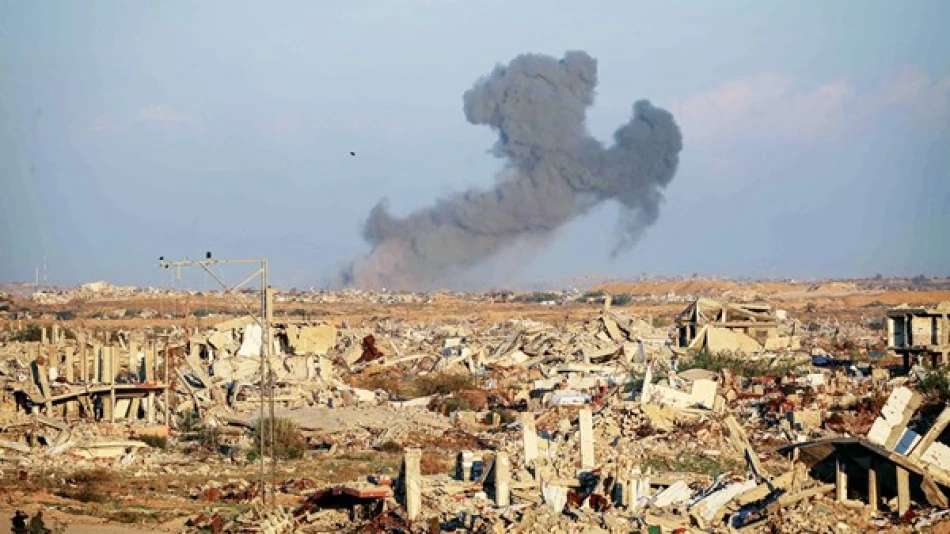
Egypt and Qatar are pushing hard for an international peacekeeping force in Gaza, saying it's needed now to monitor the fragile ceasefire. The call comes as Israeli strikes killed four Palestinians yesterday, raising questions about whether the current truce can hold without proper oversight.
Egyptian Foreign Minister Badr Abdelati and Qatari Prime Minister Mohammed bin Abdulrahman Al Thani discussed the urgent need for this international stabilization force during talks yesterday. Both countries say the force should be deployed along the "Yellow Line" to verify ceasefire compliance, especially since Israel continues daily violations according to Egyptian officials.
"We need to deploy this force on the ground as quickly as possible because one of the parties - Israel - is violating the ceasefire daily, so we need monitors," Abdelati said at the Doha Forum. He also clarified that the Rafah crossing between Egypt and Gaza won't become a gateway for forced displacement, but rather a channel for flooding Gaza with humanitarian and medical aid.
The Qatari Prime Minister was blunt about the current situation. "We are at a critical moment. We haven't achieved the goal yet, so what we just did is merely a temporary halt," he said. "We cannot consider it a ceasefire yet. A ceasefire cannot be complete without full withdrawal of Israeli forces and the return of stability to Gaza."
Here's where it gets complicated. The international force is supposed to be part of the second phase of the Gaza peace agreement, but negotiations are at a critical juncture. Qatar, Egypt, and the US have been mediating, but the current arrangement feels more like a pause than a real ceasefire.
Norway's Foreign Minister Espen Barth Eide warned that the stabilization force and peace council must be formed this month. He called the current ceasefire fragile and said it can't survive much longer in its present form. The force would need to function as a proper peacekeeping mission, not just observers.
Turkey has also signaled its willingness to participate in Gaza peace efforts. International negotiations led by the original mediators are ongoing about the force's structure, mission, and rules of engagement.
The timing matters for several reasons. First, daily violations are eroding trust in the ceasefire mechanism. Second, humanitarian aid flow remains inconsistent without proper security guarantees. And third, any reconstruction efforts need a stable environment to begin.
For regional stability, this force represents a test case for international intervention in one of the world's most volatile conflicts. Success could provide a model for future peacekeeping efforts, while failure might push the region back toward full-scale conflict.
The challenge now is getting all parties to agree on the force's composition and mandate before the current fragile truce completely breaks down.