Dubai Government's 2026-2028 Budget Approved by Sheikh Mohammed, Totaling AED 302.7 Billion
 Layla Al Mansoori
Dubai just approved its biggest budget ever - a massive 302.7 billion dirhams in spending over three years (2026-2028) with revenues of 329.2 billion dirhams. This isn't just about bigger numbers. It's Dubai's blueprint for doubling its economy and becoming one of the world's top three economic cities by 2033.
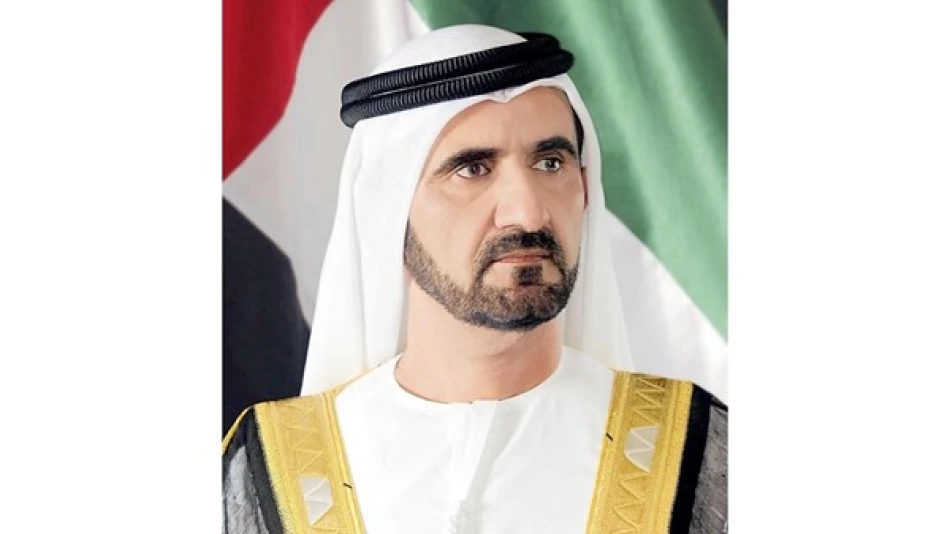
Sheikh Mohammed bin Rashid Al Maktoum, UAE Vice President and Prime Minister, approved Law No. 15 of 2025 covering Dubai's budget cycle for 2026-2028. The plan shows Dubai is serious about its D33 Economic Agenda - an ambitious roadmap that puts the emirate on track to transform from regional hub to global economic powerhouse.
For 2026 alone, Dubai will spend 99.5 billion dirhams while bringing in 107.7 billion dirhams in revenue. That 8.2 billion dirham surplus isn't just padding - it's strategic. Dubai Finance expects to maintain an operating surplus of 5% of GDP, building the financial cushion needed for long-term stability.
Here's where the money goes: Nearly half (48%) flows into infrastructure - roads, tunnels, bridges, public transport, renewable energy stations, and waste treatment facilities. Another 28% supports social development including healthcare, education, housing, and family services. Security and justice get 18%, while government innovation programs receive 6%.
Sheikh Hamdan bin Mohammed bin Rashid Al Maktoum, Dubai's Crown Prince, said the budget creates a "financial roadmap" to accelerate growth in key sectors. The focus isn't just traditional business - Dubai is betting big on space research, artificial intelligence, and digital transformation.
This matters for several reasons. First, Dubai is positioning itself as a knowledge-based economy rather than just a trade and tourism hub. The heavy investment in AI and digitization signals a shift toward higher-value industries that can compete globally.
Second, the budget's financial discipline sends a strong message to international investors. Dubai is setting aside 5 billion dirhams as a general reserve - money that stays untouched to handle future challenges. This kind of fiscal responsibility makes the emirate more attractive to global capital.
The timing is smart too. While many governments struggle with post-pandemic debt, Dubai is expanding from a position of strength. The emirate has consistently exceeded budget execution targets in recent years, earning top marks from the global Public Expenditure and Financial Accountability program.
Dubai Finance is also pushing hard on its cashless strategy. The goal is to become a global model for digital payments, reducing cash dependency while making government services faster and more transparent. This connects directly to the broader economic vision - a fully digital government supporting a digital economy.
For businesses and investors, this budget cycle represents opportunity. The massive infrastructure spending creates immediate contracts and jobs. The focus on entrepreneurship and innovation suggests new incentives and support programs are coming. And the financial stability gives companies confidence to make long-term commitments.
But here's the real test: execution. Dubai has set ambitious targets before and delivered. The challenge now is whether this level of spending can actually double the economy in less than a decade while maintaining the fiscal discipline that makes it all possible.
The budget also reflects Dubai's unique approach to government efficiency. Instead of just spending more, the emirate is implementing performance-based budgeting that links strategic planning to financial allocation. Government entities now get measured on results, not just how much they spend.
This three-year budget cycle gives Dubai something many governments lack - predictability. Companies can plan major investments knowing the government's priorities and spending patterns through 2028. That stability is valuable in an uncertain global economy.