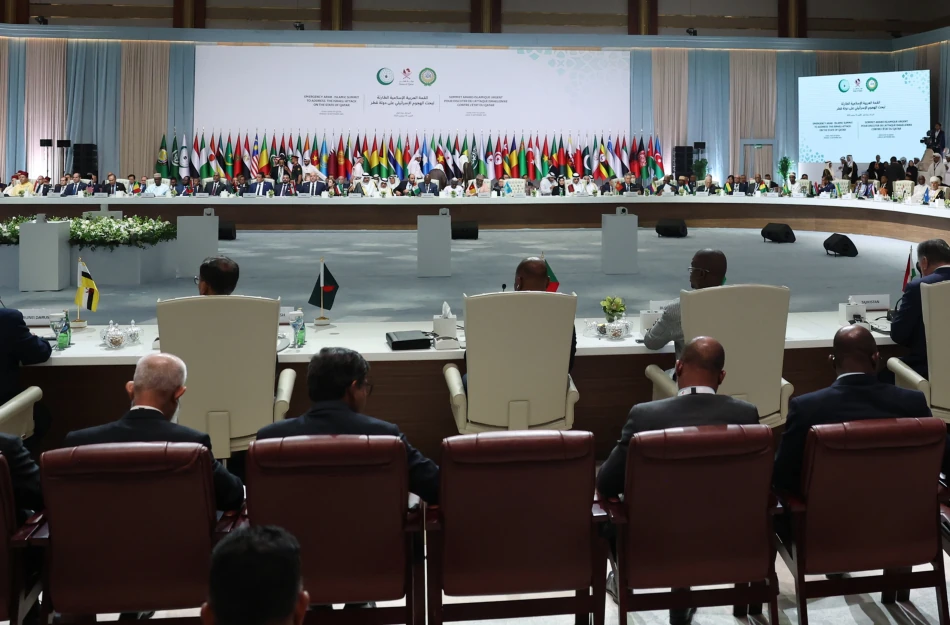
Doha Summit Calls for "Diplomatic Ties Review" with Israel After Qatar Attack
 Sara Khaled
Arab and Islamic Leaders Call for Diplomatic Reset with Israel Following Hamas Official Targeting
Arab and Islamic leaders concluded an emergency summit in Doha with a unified call to "review" diplomatic and economic ties with Israel, marking a significant escalation in regional diplomatic pressure following Israel's targeting of Hamas officials on Qatari soil. The summit's final communique represents one of the strongest collective responses from the Arab world in recent years, potentially reshaping Middle Eastern diplomatic dynamics.
Summit Demands Comprehensive International Action
The emergency gathering produced a detailed action plan that extends far beyond symbolic gestures. Leaders called for comprehensive legal measures to prevent Israel from continuing what they termed "actions against the Palestinian people." The demands include ending impunity, accountability for violations, sanctions implementation, and critically, suspending arms transfers and military materials.
The inclusion of arms embargo calls is particularly significant, as it directly targets Israel's defense relationships with major suppliers including the United States and European nations. This represents a strategic shift from previous diplomatic protests to concrete economic and military pressure points.
Qatar's Role as Regional Diplomatic Hub Under Scrutiny
The summit's location in Doha carries special weight given Qatar's unique position as both a U.S. ally hosting American military bases and a mediator with Hamas leadership. The targeting of Hamas officials on Qatari territory represents a direct challenge to Qatar's sovereignty and its carefully cultivated role as a neutral mediator in regional conflicts.
This incident could force Qatar to recalibrate its diplomatic balancing act between maintaining Western partnerships while preserving its credibility as an honest broker with Palestinian factions and other regional actors.
Economic Implications for Regional Markets
The call for economic relationship reviews could impact several key sectors. Israel's growing trade relationships with Gulf states, formalized through the Abraham Accords, may face new pressures. Technology partnerships, particularly in cybersecurity and agricultural innovation, represent billions in potential economic value that could be at stake.
Energy markets could also see ripple effects, as Israel's natural gas partnerships with regional players and its role in Eastern Mediterranean energy corridors might face political complications. However, the practical implementation of economic measures often proves more complex than diplomatic declarations suggest.
Historical Context and Regional Precedents
This diplomatic response echoes patterns from previous Middle Eastern crises, where emergency summits produce strong rhetoric that faces implementation challenges. The 2020 Abraham Accords fundamentally altered regional diplomatic calculations, making complete isolation of Israel more difficult than in previous decades.
Unlike the comprehensive Arab boycotts of the 1970s and 1980s, today's regional landscape includes normalized relationships between Israel and key Arab states, creating competing pressures between Palestinian solidarity and established economic interests.
International Implications and Next Steps
The summit's demands place pressure on international partners, particularly the United States and European Union, to respond to calls for arms embargoes and sanctions. Washington's response will be closely watched, as it balances its commitment to Israeli security with maintaining relationships across the Arab world.
The effectiveness of this diplomatic initiative will likely depend on follow-through mechanisms and the willingness of individual nations to implement concrete measures rather than rely solely on collective statements. Past experience suggests that sustained pressure requires coordination beyond summit declarations, making the coming weeks crucial for determining whether this represents genuine policy shifts or primarily symbolic positioning.