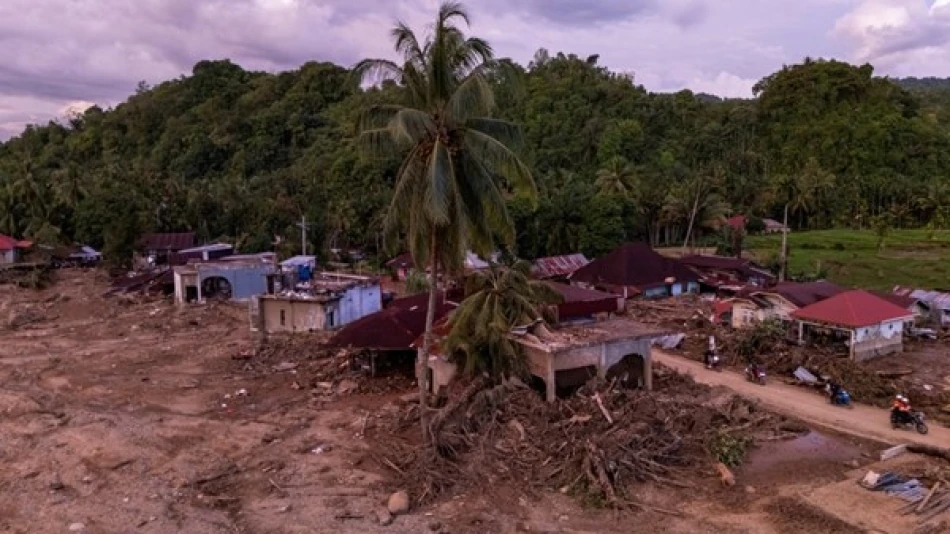
Deadly Floods Ravage Indonesia, Claiming Over 600 Lives
 Layla Al Mansoori
Devastating floods and landslides across Indonesia's Sumatra island have killed 631 people and displaced one million residents, according to the country's National Disaster Management Agency. The disaster highlights Southeast Asia's growing vulnerability to extreme weather events that are becoming more frequent and deadly across the region.
The agency reported Tuesday that 472 people remain missing while 2,600 others were injured across three provinces on the island, which sits in western Indonesia. More than 3.3 million people have been affected by the flooding, with one million evacuated to temporary shelters.
Indonesia sits in one of the world's most disaster-prone regions. The archipelago of over 17,000 islands faces regular flooding during monsoon seasons, but the scale of this disaster stands out. The country's rapid deforestation and urban development have made flooding worse by reducing the land's ability to absorb heavy rainfall.
The destruction extends beyond Indonesia's borders. Floods and landslides hit Thailand, Malaysia, and Sri Lanka during the past week, killing around 1,200 people total with hundreds more missing. This regional pattern shows how monsoon rains are becoming more unpredictable and intense.
For Indonesia's economy, the disaster creates immediate costs for emergency response and long-term rebuilding. The affected areas include agricultural regions that supply food to major cities. Palm oil plantations, a key export industry, may also face disruptions that could affect global commodity markets.
The government now faces pressure to improve early warning systems and flood defenses. But here's the challenge: Indonesia's vast geography and limited infrastructure make disaster preparedness difficult. Many remote areas lack proper drainage systems or emergency response capabilities.
Climate scientists have warned that Southeast Asia will see more extreme weather as global temperatures rise. Countries in the region need better preparation for events like this, which are likely to become more common in coming years.