Central Asian Leaders Explore Regional Cooperation: Uzbek President Proposes Economic Alliance
 Layla Al Mansoori
Uzbekistan's President Shavkat Mirziyoyev proposed creating a new regional bloc called the "Central Asia Community" on Sunday, aiming to strengthen economic ties across a region home to more than 80 million people. The move signals a major shift toward cooperation among five former Soviet republics that have often struggled with tense relationships since independence.
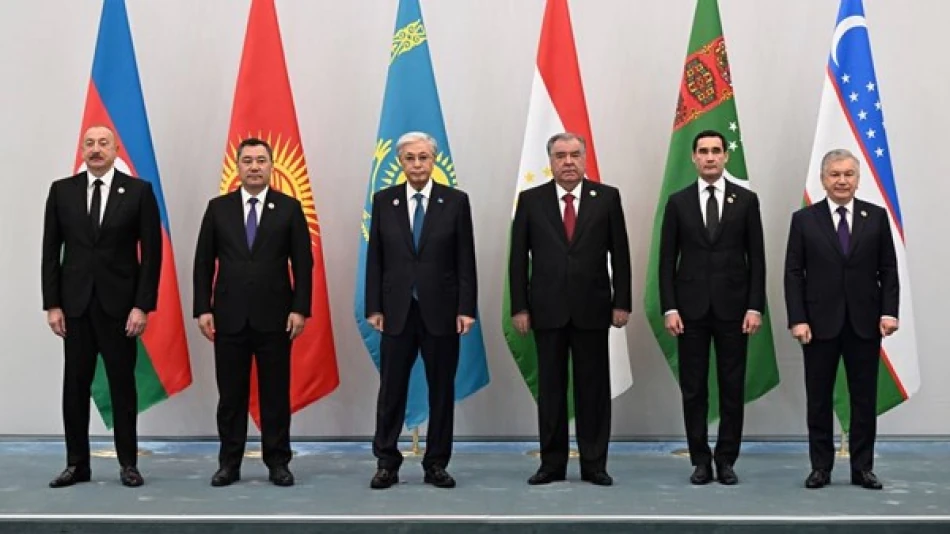
Mirziyoyev made the proposal during a summit in Tashkent that brought together leaders from all five Central Asian nations - Uzbekistan, Turkmenistan, Kazakhstan, Tajikistan, and Kyrgyzstan - plus Azerbaijan. He emphasized the need for stronger economic, security, and environmental cooperation across the region.
This isn't just talk. The five countries have been actively working toward better integration over the past few years, moving away from decades of sometimes hostile relations. Earlier this year, Kyrgyzstan and Tajikistan finally resolved a long-running border dispute that had killed hundreds of people over the years.
The timing is significant. All five Central Asian leaders visited Washington earlier this month for talks with President Donald Trump, showing their growing importance on the global stage. The region sits at a crucial crossroads between Russia, China, and the Middle East, making it strategically valuable for trade routes and energy resources.
In a separate development, the five nations voted to include Azerbaijan in their regular meetings. While Azerbaijan is technically part of the South Caucasus rather than Central Asia, its inclusion suggests the group wants to expand its influence beyond traditional regional boundaries.
For investors and governments watching the region, this could mean new opportunities. Central Asia holds massive oil and gas reserves, plus significant mineral wealth. But poor infrastructure and political instability have often limited development. A more integrated regional approach could help tackle these challenges and attract foreign investment.
The success of any new organization will depend on whether these countries can maintain their recent momentum toward cooperation. Historical tensions run deep, and competing influences from Russia and China add complexity to regional dynamics.