Borderless and Timeless: Isa Al Bastaki Envisions the Future of Education in the UAE
 Sara Khaled
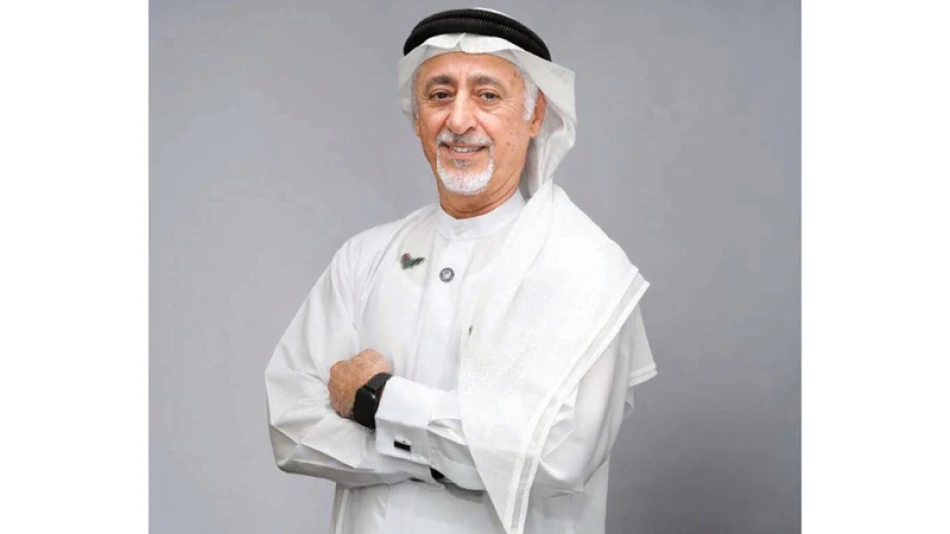
The UAE is preparing for a major shift in higher education. Dr. Issa Al-Bastaki, president of Dubai University, says the future of learning will be completely open - no physical walls, no time limits, and powered by AI. Students will learn anywhere, anytime, with smart agents guiding their progress and measuring their development.
Al-Bastaki introduced the concept of the "agile university" - one that focuses on quality excellence rather than quantity expansion. These institutions convert knowledge into economic value through applied research and innovation, helping create startups and develop patents that strengthen the knowledge economy and national competitiveness.
But here's where it gets interesting. University success isn't just measured by teaching quality or research publications anymore. Al-Bastaki explains that leading global universities today are judged by their ability to turn knowledge into economic value through startups, patents, and products that support the national economy.
The UAE's higher education sector is moving from simply producing knowledge to using it to build the economy. Advanced universities don't just teach or publish research - they graduate companies and convert research results into products that contribute to GDP. While the UAE has made progress in innovation, the focus now is accelerating the commercial transformation of research to become a sustainable pillar of economic growth.
Al-Bastaki believes the "Triple Helix" model, which integrates industry and university roles, represents the best framework for building effective innovation ecosystems. The UAE has advanced in the Global Innovation Index, especially in knowledge creation, but the ambition goes beyond current numbers. Innovation isn't optional anymore - it's a strategic necessity that aligns with the country's vision to diversify the economy away from oil.
The strategic direction for scientific research needs balance across three areas: 50% basic research to build knowledge foundations for future applications, 30% applied research to solve industry and social problems, and 20% commercial research leading to patents and startups. This directly connects research to the job market and national economy.
Dubai University has aligned its academic programs with technological shifts, launching advanced specializations in AI, cybersecurity, data analysis, FinTech, and digital marketing. The university also offers a distance MBA program officially accredited by the Ministry of Higher Education and Scientific Research, allowing students to learn flexibly from anywhere.
Partnerships Drive Real Innovation
The university commits to applied innovation through local and global research partnerships. They're working with the Mohammed bin Rashid Space Centre to analyze satellite data and develop local AI algorithms. Joint labs with global companies like Huawei are developing communications technologies and drones, including improvements to payload, speed, range, and battery development.
The rapid pace of change in skills and knowledge forces universities to adopt lifelong learning culture. One key tool is the micro-credentials system - short courses or specialized training packages aimed at re-skilling, upskilling, or combining multiple professions in one educational experience. These credentials are cumulative and can be collected later to earn recognized academic degrees.
Al-Bastaki suggests the "employee shadow" model, where graduates accompany expert employees for specific periods to gain real-world practical skills day by day. This approach shortens time and enhances professional readiness, making graduates capable of facing workplace challenges efficiently from day one.
AI Changes Everything But Doesn't Replace Humans
AI will remain a human assistant tool, not a replacement. The human mind excels at creativity, innovation, and unpredictability, while AI operates according to specific, logical algorithms. So the university professor's role changes from merely transmitting information to designing learning experiences and serving as a research and ethical guide.
Teachers now need to strategically integrate AI into education, using smart tools to support personalized learning, analyze student performance, and design innovative educational activities that stimulate independent thinking and creativity while maintaining the human dimension and ethical guidance necessary for the new generation of learners.
Modern education is heading toward a model without walls, supported by AI. Students can learn from anywhere at any time, with the help of smart agents that guide them and design their educational experience according to their skills and practical needs. This makes education personal, flexible, and continuous.
Dubai University has established a specialized committee to develop an AI Agent that will serve students and academic staff, supporting all learning and interaction processes within virtual classrooms to enhance a more flexible and effective educational experience.
Rethinking Global Rankings
Al-Bastaki expressed reservations about some ranking models that combine "consulting and evaluation" roles in the same entity, considering this a conflict that affects objectivity and evaluation accuracy. He proposes creating a unified Arab framework for university ranking, managed by higher education ministries in partnership with neutral international institutions.
This framework would focus on the educational and economic impact of universities rather than superficial indicators, achieving greater transparency and lower costs in the evaluation process. This would enhance fairness and credibility in comparing universities across the region.