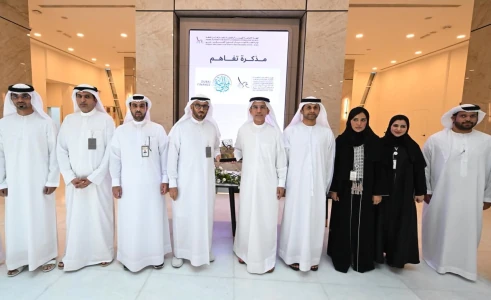
Abu Dhabi Courts Register 43,000 Civil Marriages
 Sara Khaled
Abu Dhabi's Civil Marriage Courts See 43% Surge as UAE Becomes Middle East's Wedding Hub for Expats
Abu Dhabi's pioneering civil marriage system for foreigners has reached a milestone of 43,000 registered contracts since 2021, with over 10,000 new applications in the first half of 2025 alone—a 20% year-on-year increase that signals the emirate's growing appeal as a legal and lifestyle destination for international residents. The success reflects a broader strategic shift positioning the UAE as the region's most progressive jurisdiction for expatriate family law.
Record Growth Demonstrates Regional Leadership
The Abu Dhabi Judicial Department's latest statistics reveal explosive growth in civil marriage registrations, climbing from approximately 5,400 contracts in 2022 to over 16,000 in 2024. The current trajectory suggests 2025 could see another record-breaking year, with half-year figures already matching substantial portions of previous annual totals.
Counselor Yousef Saeed Al-Abri, Undersecretary of the Judicial Department, emphasized that this surge reflects the unique quality of service offered by the Middle East's first dedicated civil family court for foreigners. The bilingual Arabic-English framework has eliminated traditional language barriers that previously complicated legal proceedings for non-Arabic speakers.
Strategic Positioning Against Regional Competitors
Abu Dhabi's civil marriage initiative represents a calculated move to differentiate itself from regional competitors like Qatar and Saudi Arabia, while building on the UAE's reputation for pragmatic governance. Unlike Singapore's civil marriage system, which primarily serves its own diverse population, or Cyprus's appeal to European couples, Abu Dhabi is targeting the broader international expat community across the Middle East and beyond.
Comprehensive Service Portfolio
The civil family court offers an end-to-end legal ecosystem that includes:
Pre-marriage services: Civil marriage contracts and prenuptial agreement authentication, providing legal certainty for international couples with complex asset structures.
Divorce proceedings: Single-session civil divorce within 30 days, featuring appointed financial experts to calculate alimony and asset division—a stark contrast to lengthy traditional processes.
Child custody: Automatic shared custody arrangements ensuring equal parental rights, appealing to expatriate families concerned about jurisdictional complications.
Estate planning: Civil will preparation and equal inheritance distribution among children, offering predictable succession planning for international families.
Economic and Investment Implications
This legal infrastructure development carries significant economic implications beyond family law. For multinational corporations, the availability of comprehensive civil legal services reduces the complexity of relocating senior executives and their families to the UAE. The system particularly appeals to Western expatriates who may be uncomfortable with traditional Islamic family law frameworks, even when not directly applicable to them.
The digital-first approach allows non-residents to access services remotely, potentially creating a new revenue stream from legal tourism. This positions Abu Dhabi to compete with established offshore legal centers like the British Virgin Islands or Delaware for certain types of family legal services.
Broader Regional Context
Abu Dhabi's civil marriage courts reflect the UAE's broader strategy of legal modernization and social liberalization designed to attract global talent and investment. This initiative parallels other recent reforms including extended residency visas, relaxed alcohol regulations, and enhanced women's rights protections.
The success also highlights a growing demand for legal certainty among the region's expatriate population, which comprises over 80% of the UAE's residents. As regional geopolitical tensions persist, the UAE's emphasis on legal predictability and international standards becomes increasingly valuable for long-term residents and businesses.
The rapid adoption rate suggests Abu Dhabi has identified and filled a genuine market gap, potentially inspiring similar initiatives across the Gulf Cooperation Council states as they compete for international talent and investment in the post-oil economic transition.